PRP Hair Treatment
A session-based protocol used for post-transplant support and early-stage shedding.
Know what to expect over 12 months
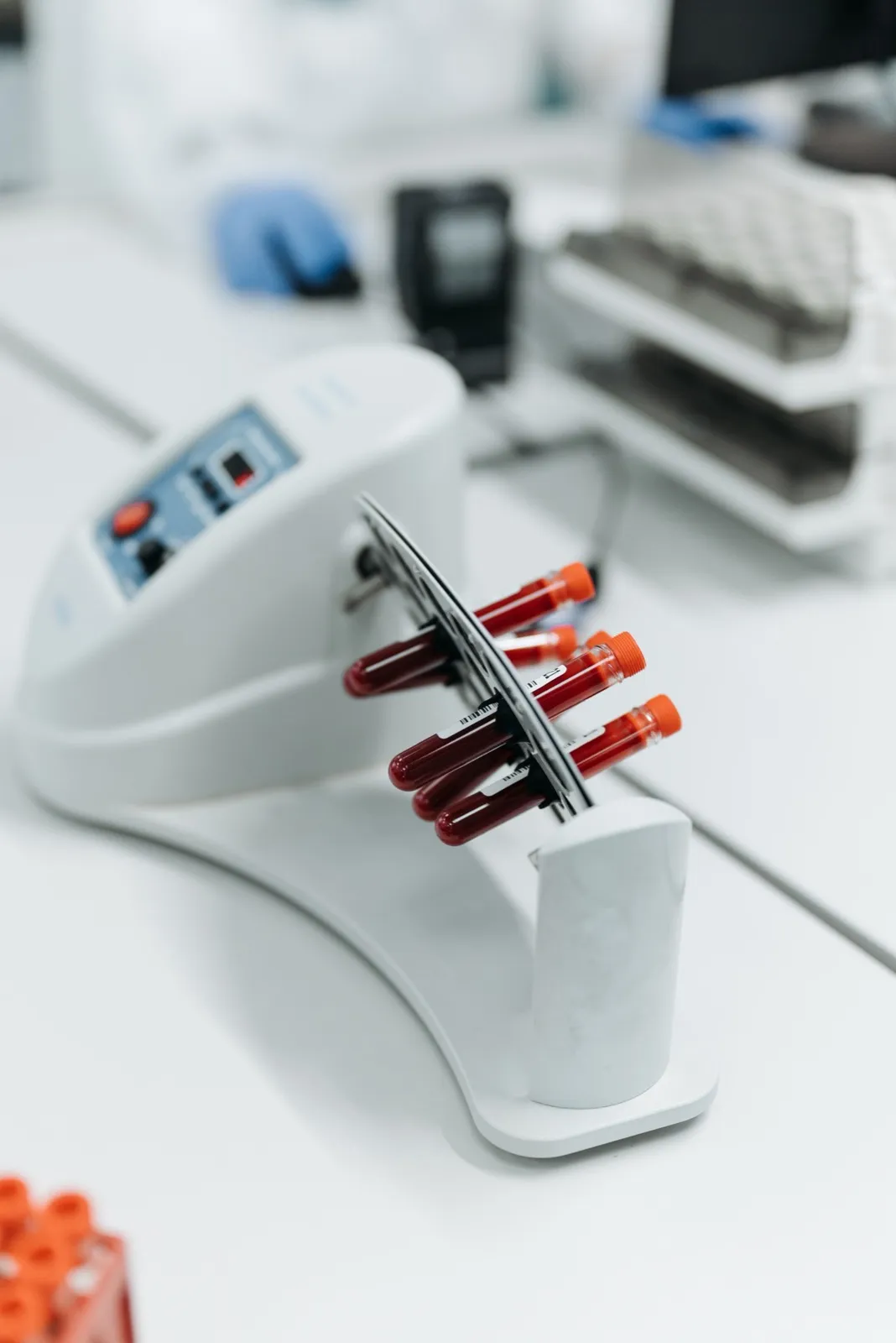
PRP (Platelet-Rich Plasma) involves injecting the scalp with plasma separated from the patient's own blood via centrifuge and enriched with growth factors. It's used in two main ways: to support healing after a hair transplant and nourish newly placed follicles, or to support the cycle of existing follicles in early-stage androgenetic hair loss.
PRP is applied as a session-based protocol repeated at set intervals; a single session isn't expected to produce a lasting effect, and regular sessions (usually monthly) are needed. Its effectiveness varies depending on the stage of loss, how many follicles are still active, and the patient's general health.
PRP's most important limitation is this: in an area that's fully bald with no remaining follicular activity, PRP won't generate new follicles and doesn't replace a hair transplant. It's best understood either as a supportive treatment that complements a transplant, or as an option for slowing loss in cases still in the early stage, where follicles are miniaturised but still active. Suitability becomes clear after examining the scalp and the stage of loss.
Who Is It Suitable For?
Suitable
- Patients with early-stage androgenetic loss whose follicles are miniaturised but still active
- Patients wanting to support healing and nourishment of newly placed follicles after a transplant
- Patients able to commit to a regular session protocol aimed at slowing the rate of loss
- Patients wanting to support overall scalp quality where follicular activity is preserved
- Patients seeking additional support alongside a transplant plan, who accept PRP's complementary role
Not Suitable
- Patients seeking a standalone solution in areas that are fully bald or scarred, with no remaining follicular activity
- Patients with a blood clotting disorder or active blood condition
- Anyone with an active scalp infection, eczema, or psoriasis
- Patients who are pregnant or breastfeeding without physician approval
- Patients expecting a permanent, density-increasing result from PRP (that expectation is met by a hair transplant)
How Is It Performed?
- Blood draw — A small blood sample is taken from the patient.
- Centrifuge separation — The blood is spun in a specialised centrifuge to separate out the platelet-rich plasma layer.
- Scalp preparation — The treatment area is cleaned, and a topical anaesthetic cream is applied if requested.
- Micro-injection — The separated plasma is injected into the scalp with fine needles at set intervals.
- Post-session guidance — Aftercare advice is given for mild redness and sensitivity, and the next session date is scheduled.
How It Differs From Other Techniques
| Feature | PRP Treatment | Hair Mesotherapy | Hair Transplant |
|---|---|---|---|
| Source of material | Plasma separated from the patient's own blood | Vitamin/amino-acid/active-ingredient blend | The patient's own follicular units |
| Mechanism of action | Supports the follicle cycle via growth factors | Supports scalp nourishment | Places living follicles in a new area |
| Effect on fully bald/scarred areas | None — requires active follicles | None — requires active follicles | Present — new follicles are relocated from the donor area |
| Permanence | Session-dependent, requires repetition | Session-dependent, requires repetition | Considered permanent |
| Repetition frequency | Usually a monthly repeated protocol | Usually repeated every few weeks | Single session, with additional sessions later if needed |
| Relationship to a transplant | Complements a transplant, doesn't replace it | Complements a transplant, doesn't replace it | The primary method delivering density increase |
Recovery Timeline
| Period | Expected State |
|---|---|
| Session day | Mild redness and sensitivity in the treated area |
| Week 1 | Redness resolves; no restrictions on daily activity |
| Month 1 | Initial physiological responses can be assessed; visible change is still early |
| Month 3 | Support to the follicular cycle may become noticeable |
| Month 6 | The protocol's effect is assessed, and the decision to continue becomes clear |
Three photos are enough
Send three photos — front, crown and back. You'll receive your donor capacity, graft range and suitable technique within 24 hours.
Request a free analysis
Session Protocol and Expectation Management
PRP isn't a single-session procedure but a protocol repeated at set intervals (usually monthly); the number and frequency of sessions is set according to the stage of loss and a scalp assessment. Once the initial protocol is complete, occasional maintenance sessions may be recommended to preserve the level of support achieved. The key point in managing expectations is that PRP supports the cycle of existing, still-active follicles, but doesn't generate new follicles in an area that's fully bald. For this reason, PRP is considered a complementary step for patients planning a transplant, and an option for slowing loss in early-stage cases. Outcomes vary from person to person, depending on the stage of loss and general health.
See your graft range for this technique
Your loss pattern and donor density produce a range, a suitable technique and an estimated session length. The final plan comes from a photo assessment.
Frequently asked about this treatment
No, PRP supports the cycle of existing, still-active follicles, but it doesn't create new follicles in an area that's completely bald and follicle-free. If the goal is a permanent increase in density, a hair transplant is needed. PRP plays a supporting role alongside that process.