Eyebrow Transplant
Single-follicle grafts placed at a very low angle; requires regular trimming afterward.
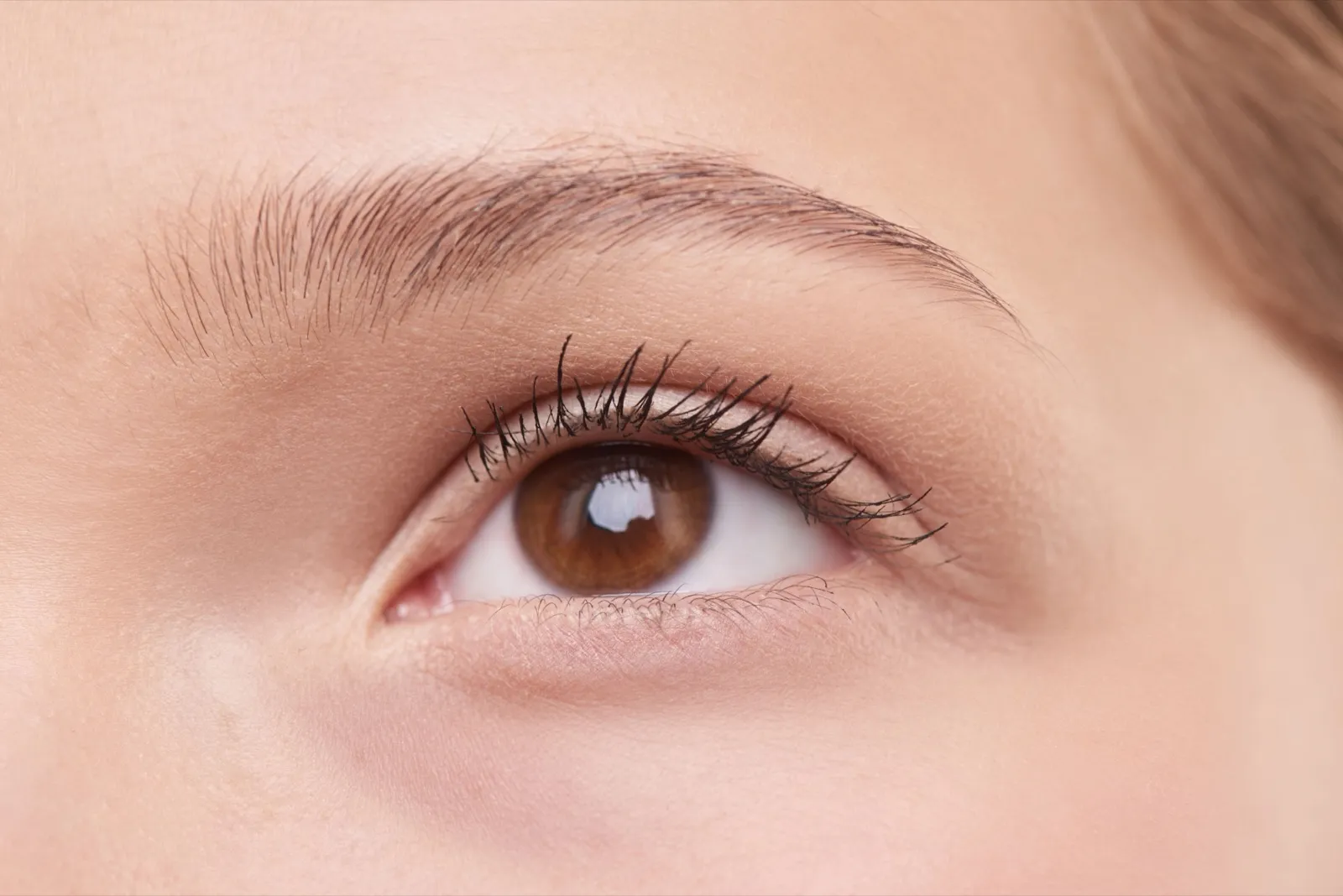
Know what to expect over 12 months
An eyebrow transplant places single-follicle units taken from the back of the scalp into thinned, permanently lost, or over-plucked/injury-affected areas of the eyebrow. Eyebrow hair differs from scalp hair in that it emerges from the skin at a very low, almost horizontal angle; each follicle is therefore placed individually, following the eyebrow's natural arc and hair direction (angled upward on the inner section, outward on the outer section).
The procedure uses only single-follicle grafts; multi-follicle grafts would create a thick, unnatural look in the eyebrow area. Because of this precision requirement, an eyebrow transplant is time-consuming even though the graft count is relatively low (typically in the 200–400 graft range).
Hair taken from the scalp tends to grow faster than natural eyebrow hair, which is why transplanted eyebrows need regular trimming and shaping afterward — a permanent maintenance requirement of the procedure. This method suits patients with permanent eyebrow loss, permanent thinning from prolonged waxing/tweezing, or loss from injury/surgery scarring; for temporary thinning, a dermatological assessment is recommended first.
Who Is It Suitable For?
Suitable
- Patients with genetic or permanent alopecia-related eyebrow thinning or loss
- Patients with permanent thinning from long-term waxing, tweezing, or excessive shaping
- Patients with no hair in the eyebrow area due to injury, burns, or surgical scarring
- Patients with a noticeable asymmetry between the two eyebrows
- Patients dissatisfied with temporary solutions such as permanent makeup or microblading who want a permanent option
- Patients whose donor area (scalp) has sufficient density
Not Suitable
- Patients with temporary, telogen-effluvium-type eyebrow loss linked to stress or hormones (the cause should be investigated first)
- Patients with untreated, active trichotillomania (hair-pulling disorder)
- Anyone with an active skin infection or dermatitis in the eyebrow area
- Patients known to have a tendency toward keloid formation
- Patients expecting a very thick, dense look in a single session (expectations need to be clarified in advance given the single-follicle graft limitation)
How Is It Performed?
- Eyebrow design — Facial proportions, remaining eyebrow hair, and symmetry are assessed to set the arc and the inner/outer end points.
- Local anaesthesia — Local anaesthesia is applied to the donor and eyebrow areas.
- Single-follicle graft extraction — Only single-follicle units are selected and extracted from the back of the scalp.
- Graft sorting — Follicles are examined under a microscope, and only the fine, single-follicle ones suited to the eyebrow are selected.
- Micro-channel opening — Channels are opened along the eyebrow line at a very low angle, with direction varied (upward on the inner section, outward on the outer section).
- Placement — Follicles are placed one by one, following the natural arc line.
- Aftercare instructions — The patient is briefed on washing, swelling, and the timing of the first trim.
How It Differs From Other Techniques
| Feature | Eyebrow Transplant | Microblading / Permanent Makeup | Scalp Hair Transplant |
|---|---|---|---|
| Permanence | Permanent (living follicle) | Temporary, fades or is removed over a few years | Permanent (living follicle) |
| Natural look | Living hair that grows and casts a shadow | Pigment, flat appearance | Living hair |
| Maintenance needs | Requires regular trimming | Requires periodic touch-ups | Standard hair care |
| Graft type | Single-follicle only | Not applicable (pigment) | Single-to-multi follicle |
| Tissue trauma | Low, micro-channel | Superficial, pigment via needle | Low-to-moderate |
| Procedure length | Few grafts, long detailed work | Short session | Varies with graft count |
Recovery Timeline
| Period | Expected State |
|---|---|
| Day 0-3 | Mild redness and small scab points |
| Week 1 | Scabs shed; the area looks close to normal |
| Month 1 | Shock-loss phase; transplanted hairs may shed temporarily |
| Month 3 | New hair growth becomes noticeable |
| Month 6 | Density increases; the first regular trimming routine begins |
| Month 12 | The permanent look settles; the natural arc and direction fully establish |
Three photos are enough
Send three photos — front, crown and back. You'll receive your donor capacity, graft range and suitable technique within 24 hours.
Request a free analysis
Graft Range and Donor Capacity
The graft count used in an eyebrow transplant is generally low compared with other areas; a single eyebrow is usually completed with a limited number of single-follicle grafts, and the total scales up when both eyebrows are planned together. Despite the low graft count, procedure time doesn't shorten, since each follicle is placed individually with careful attention to arc and angle. The back of the scalp is the preferred donor source, since its fine, single-follicle units give the result closest to the eyebrow's natural structure. Because it uses a very small area, donor capacity for eyebrows generally doesn't conflict with hair-transplant needs. Outcomes vary from person to person.
See your graft range for this technique
Your loss pattern and donor density produce a range, a suitable technique and an estimated session length. The final plan comes from a photo assessment.
Frequently asked about this treatment
Yes, because the follicles used are taken from the scalp, they tend to grow faster than natural eyebrow hair. This means they need regular trimming and shaping. It's an ongoing maintenance requirement of eyebrow transplantation.